
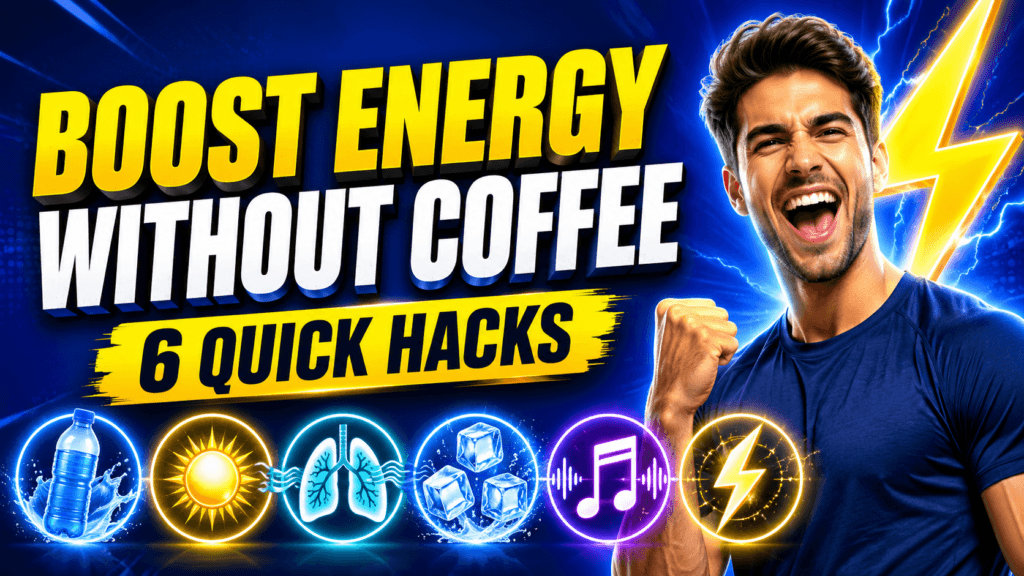
How to have more energy without coffee, boost energy naturally, stop brain fog, combat fatigue, and increase alertness without coffee using six quick energy hacks that fit into almost any daily routine.
That afternoon crash hits, your brain feels foggy, and suddenly another cup of coffee starts looking like the only way you will make it through the day.
Coffee is not automatically bad. Plenty of people enjoy it without a problem. But relying on caffeine every time your energy drops can become frustrating—especially when it interferes with sleep, causes jitters, or leaves you feeling even more tired later.
The good news is that coffee is not your only option.
Several simple habits may help you feel more awake, improve your focus, and create a quick natural energy boost. None of these techniques is a miracle cure, but they can provide a useful reset when your body and brain feel stuck in low gear.
If you prefer watching video, you can watch the full video here!
Here are six quick ways to boost your energy without coffee.
Hack #1: The 60-Second Energizer
When you have been sitting for a long time, remaining completely still usually does not help you feel more alert.
Instead, get your body moving for one minute.
You do not need a gym, workout clothes, or complicated equipment. Try one or more of the following:
- March quickly in place
- Perform several bodyweight squats
- Swing your arms in large circles
- Walk briskly around the room
- Climb a flight of stairs
- Dance for 60 seconds
Physical activity offers immediate benefits and may help you feel and function better. Even a short burst of movement can break up prolonged sitting and give your mind something new to respond to. [1]
The goal is not to exhaust yourself. You are simply increasing movement, circulation, and alertness for one focused minute.
Try This
Set a timer for 60 seconds and move at a pace that feels brisk but comfortable. When the timer ends, take a few normal breaths and notice whether you feel more awake.
People with injuries, balance concerns, or limited mobility can modify the movement by marching while seated, rolling the shoulders, or performing gentle arm movements.
Hack #2: The Hydration Reset
Sometimes low energy feels like a caffeine problem when it may actually be a hydration problem.
Dehydration can negatively affect mood, attention, short-term memory, and feelings of fatigue. Research also suggests that rehydrating after dehydration may improve fatigue, attention, and reaction time. [2]
The solution does not need to be complicated.
If you have not had anything to drink recently, pause and drink a glass of water. Then continue sipping fluids throughout the day rather than waiting until you feel completely drained.
Make Water Easier to Remember
Try connecting hydration to habits that already exist:
- Drink water after waking up
- Keep a bottle beside your workspace
- Drink a glass with every meal
- Take a few sips whenever you check your phone
- Add lemon, lime, berries, or cucumber for flavor
More is not always better, and you do not need to force excessive amounts of water. People who have been told to restrict fluids because of a heart, kidney, or other medical condition should follow their healthcare provider’s instructions.
Hack #3: The Sunlight Signal
Your brain uses light as an important signal for determining when it should feel awake and when it should prepare for sleep.
Morning light exposure can help support the body’s internal clock, also known as the circadian rhythm. Research has associated brighter morning light with better sleep timing, improved sleep, and reduced morning sleepiness. [3]
When possible, step outside shortly after waking up or during your first major energy slump of the day.
Even five to ten minutes outdoors may feel more refreshing than sitting beside a dim window.
Try This
Go outside and:
- Walk around for several minutes.
- Look toward the general outdoor environment—not directly at the sun.
- Take a few relaxed breaths.
- Allow the combination of daylight, fresh air, and movement to wake you up.
Cloudy daylight is still considerably brighter than most indoor lighting. You should also continue using appropriate sun protection when spending extended time outdoors.
Hack #4: The Stimulating Breath
Your breathing pattern can influence how tense, calm, or focused you feel.
Slow and controlled breathing has been studied for its effects on stress regulation, heart-rate variability, emotional control, and concentration. The evidence is stronger for improving calmness and focus than for creating a dramatic burst of physical energy, but that mental reset can still be valuable when brain fog takes over. These are called Bellows Breath.
For this hack, avoid aggressive hyperventilation. The goal is controlled breathing—not making yourself dizzy.
Try This 60-Second Breathing Reset
- Sit or stand upright.
- Relax your shoulders.
- Inhale comfortably through your nose.
- Exhale slowly through your mouth or nose.
- Repeat for approximately one minute.
You can make the breaths slightly deeper than usual, but they should remain comfortable.
Stop immediately if you become dizzy, lightheaded, short of breath, or uncomfortable. People with respiratory, cardiovascular, or other medical concerns should ask a healthcare professional before trying unfamiliar breathing exercises.

Hack #5: The Cold Shock
A quick change in temperature can feel intensely stimulating.
However, this hack needs a little common sense. Full-body cold-water immersion is not necessary, and suddenly jumping into freezing water can trigger rapid breathing, a faster heart rate, and increased blood pressure. [5]
For a gentler reset, try:
- Splashing cool water on your face
- Holding a cool washcloth against your cheeks
- Briefly rinsing your hands and wrists with cool water
- Finishing a normal shower with a short period of cooler—not painfully cold—water
The sudden temperature change may help interrupt that sleepy, sluggish feeling and make you feel more alert.
Important Safety Note
Cold exposure is not appropriate for everyone. People with heart disease, circulation problems, uncontrolled high blood pressure, fainting issues, or other significant medical conditions should speak with a healthcare professional first.
Never use extreme cold, remain in cold water alone, or force yourself to continue when you are shivering uncontrollably, gasping, dizzy, numb, confused, or experiencing pain.
This is supposed to be a quick wake-up signal—not an audition for a polar-bear documentary.
Hack #6: The Upbeat Distraction
Music can quickly change the emotional atmosphere around you.
Research suggests that preferred background music may improve task-focused attention during certain low-demand activities. Music can also affect mood, motivation, pleasure, and arousal. [6]
Create a short playlist filled with songs that make you want to move. When your energy begins to drop, play one track and use it as a mental reset.
The best song is not necessarily the fastest or loudest one. It is the song that reliably makes you feel more engaged.
Turn One Song Into an Energy Break
While the song plays, try one of these:
- Walk around the room
- Stretch your arms and legs
- Clean one small area
- Refill your water bottle
- Step outside
- Complete one simple task you have been avoiding
This hack combines movement, enjoyment, and a change of focus. Sometimes that is exactly what your brain needs to escape a sluggish loop.
Combine the Hacks Into a Five-Minute Energy Reset
You do not have to choose only one technique.
When you are struggling with low energy or brain fog, try this simple routine:
- Minute 1: March in place or walk briskly.
- Minute 2: Drink a glass of water.
- Minute 3: Step outside or stand near bright natural light.
- Minute 4: Practice slow, controlled breathing.
- Minute 5: Play an upbeat song and move.
This routine gives your body several different signals at once: movement, hydration, light, breathing, and music.
You may not suddenly feel like you could run a marathon—and that is not the goal. The goal is to feel alert enough to complete your next task without immediately reaching for another coffee.
What About Brain Fog?
Brain fog is not a formal medical diagnosis. It is a common phrase used to describe experiences such as:
- Difficulty concentrating
- Forgetfulness
- Slow thinking
- Mental fatigue
- Trouble finding words
- Feeling mentally disconnected or unfocused
Temporary brain fog may appear after poor sleep, stress, dehydration, skipped meals, or long periods of inactivity. However, persistent brain fog and chronic fatigue can also be associated with medical conditions, medications, mental-health concerns, or sleep disorders.
Energy hacks may help with an occasional slump, but they do not treat an underlying health condition.
If fatigue is persistent, severe, getting worse, or is not relieved by adequate sleep, nutrition, and lower stress, it should be discussed with a healthcare professional. [7]
Seek medical attention promptly when fatigue appears with concerning symptoms such as chest pain, shortness of breath, fainting, confusion, unexplained weight loss, fever, unusual bleeding, severe weakness, or sudden neurological changes.
Healthy Habits Matter More Than Quick Fixes
These six techniques are designed for temporary energy dips. Your long-term energy still depends on the basics:
- Consistent, adequate sleep
- Balanced nutrition
- Regular physical activity
- Sufficient hydration
- Stress management
- Appropriate medical care
- Reasonable caffeine habits
No single hack can compensate indefinitely for poor sleep, inadequate nutrition, or an untreated health problem.
Think of these strategies as tools—not cures.
Used alongside a healthy lifestyle, they may help you increase alertness, improve focus, combat fatigue, and get through occasional low-energy moments without relying entirely on coffee.
Final Thoughts – How to Have More Energy Without Coffee
Learning how to have more energy does not always require caffeine, expensive supplements, or a complete lifestyle overhaul.
Start with something small.
Move for 60 seconds. Drink some water. Step into the daylight. Reset your breathing. Use cool water safely. Play a song that changes your mood.
Your body may simply need a clear signal that it is time to wake up and reengage.
Which of these six energy hacks are you going to try first? Share your answer in the comments.